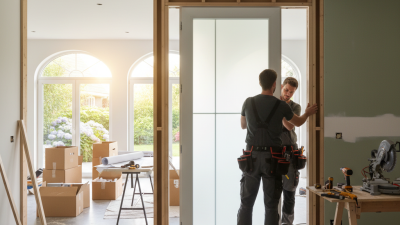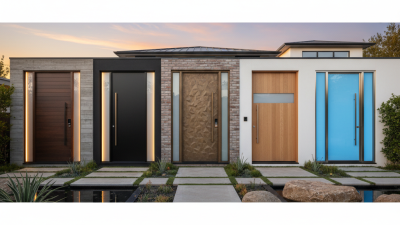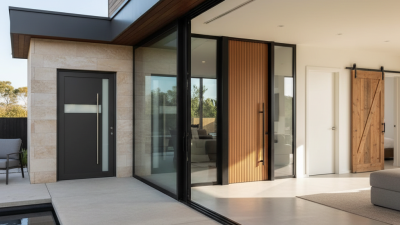
Choosing the right door fitters is not merely a matter of finding the lowest hourly rate. It affects security, weather resistance, energy performance, and the finished appearance of your property. The U.S. Bureau of Labor Statistics projects 6% employment growth for construction and extraction occupations from 2023 to 2033. Its May 2023 data also reported a median annual wage of $56,350 for carpenters, highlighting the value of trained installation skills.
Different projects require different specialists. A residential carpenter may handle a standard timber door, frame adjustment, and interior trim. A commercial door contractor is better suited to fire-rated entrances, access-control hardware, and high-traffic aluminium systems. For replacement work, an installer familiar with building envelopes can check threshold height, flashing, insulation, and air leakage before sealing the frame. That inspection matters. ENERGY STAR guidance identifies air leakage as a major source of wasted household energy, while the National Fenestration Rating Council stresses accurate product and installation performance ratings.
Ask for relevant experience, insurance, references, and clear written measurements. A reputable door fitters team should explain which parts require carpentry, glazing, electrical coordination, or manufacturer certification. Look for FGIA InstallationMasters or equivalent training where applicable. Certification is useful, but it is not magic. A certified installer can still misunderstand an old, uneven opening.
The best choice depends on the door, building, and risk level. This guide compares common door fitters by project type, skill set, and practical limitations, so your decision rests on evidence rather than confident promises.
What Types of Door Fitters Are Best for Your Project?
Understanding the Main Types of Door Fitters
The best fitter depends on the door, building, and required hardware. General carpenters suit standard internal timber doors, frames, and architraves. Their work often includes trimming, shimming, hinge alignment, and latch adjustment. The U.S. Bureau of Labor Statistics projects 1% employment growth for carpenters between 2023 and 2033. This suggests steady demand, but not every carpenter specialises in accurate door installation.
Specialist door installers handle entrance doors, fire-rated assemblies, acoustic doors, and heavier commercial systems. They understand frame tolerances, closer strength, seals, and manufacturer installation instructions. Commercial hardware technicians are better for panic hardware, electronic access systems, and high-traffic entrances. Glaziers may be the right choice for framed glass doors. Ask for evidence of similar completed work, not just a low hourly rate.
Performance matters. The U.S. Energy Information Administration reported that space heating represented about 42% of household energy use in its 2020 Residential Energy Consumption Survey. Poorly sealed external doors can increase drafts and discomfort. Check weather seals, threshold contact, and frame plumb before accepting the work. Local accessibility rules may also require specific clear openings, maneuvering space, and threshold limits. Requirements vary by location.
A small hinge-side error can create rubbing, noise, and early wear. No fitter is perfect. Even experienced installers can overlook a distorted opening. A careful site survey remains more valuable than confident promises.
What Types of Door Fitters Are Best for Your Project?
Matching Door Fitter Expertise to Your Project Needs
The right door fitter depends on the building, door material, and installation risk. An interior carpenter suits lightweight timber doors, trim, and standard hinges. External doors need someone experienced with weather seals, thresholds, drainage, and security hardware. Fire-rated doors require a fitter familiar with certified assemblies, approved gaps, and accurate closer adjustment. Small errors matter.
A commercial specialist is better for schools, offices, and apartment blocks. These projects often involve repeated doors, access controls, heavy traffic, and strict inspection records. The U.S. Bureau of Labor Statistics projects 4% employment growth for carpenters from 2023 to 2033. That signals steady demand, but not equal expertise. Ask for recent projects similar to yours. Request evidence of training, insurance, and knowledge of local building requirements.
The Associated General Contractors’ 2024 Workforce Survey found that 94% of contractors struggled to fill open positions. Availability alone should not decide your choice. Experience with your exact door system matters more. A fitter should measure the opening at several points, check wall plumb, and inspect floor levels before ordering. Measure twice.
Even a detailed quotation can miss concealed wiring or uneven masonry. That is where honest communication becomes practical expertise. Ask how the fitter handles defects, replacement parts, and post-installation adjustments. A rushed installation may look acceptable on day one, then reveal binding, drafts, or loose fixings weeks later.
| Door Fitter Type | Typical Door Systems | Core Expertise | Best Suited Projects | Important Project Requirements | Typical Installation Complexity | Recommended When |
|---|---|---|---|---|---|---|
| General Residential Door Fitter | Interior doors, exterior entry doors, patio doors, replacement door sets | Accurate measuring, frame installation, hinge fitting, lock and handle installation, weather sealing | Homes, apartments, extensions, renovations and routine door replacements | Correct opening measurements, suitable frame condition, compatible hardware and adequate weather protection | Low to Medium | Choose this specialist for standard residential doors without unusual structural, security or accessibility demands. |
| Finish Carpenter or Joinery Specialist | Solid timber doors, bespoke doors, period-style doors, concealed-frame doors | Fine woodworking, trimming, scribing, fitting uneven openings and achieving precise reveals | High-quality interiors, custom homes, heritage-style renovations and detailed architectural work | Moisture-controlled materials, accurate tolerances, careful finishing and coordination with decorators or joiners | Medium to High | Use this fitter when appearance, timber detailing and a close fit are more important than speed. |
| Commercial Door Fitter | Aluminium doors, steel doors, glazed entrance doors, shopfront doors and high-use doors | Commercial frames, closers, panic hardware, adjustable hinges, access coordination and heavy-duty hardware | Offices, retail premises, schools, public buildings and multi-occupancy properties | Site access planning, out-of-hours work, high traffic levels, coordinated hardware and building safety procedures | Medium to High | Select a commercial specialist when doors must withstand frequent use or integrate with a wider building fit-out. |
| Fire-Door Installation Specialist | Fire-rated timber door sets, steel fire doors, fire exits and smoke-control door assemblies | Certified door-set installation, intumescent seals, self-closing devices, compatible hinges and compliant gaps | Apartment blocks, offices, care facilities, schools, industrial buildings and protected escape routes | The complete door assembly must match its tested or approved specification; unsuitable modifications can affect performance | High | Use a specialist whenever fire resistance, smoke control or protected escape routes are part of the project. |
| Security Door Fitter | Reinforced steel doors, security doors, multi-point locking systems and secure access doors | Door reinforcement, lock alignment, frame anchoring, security hardware and controlled installation procedures | External entrances, plant rooms, storage areas, apartment entrances and properties with heightened security needs | Strong substrate, correct frame fixing, compatible cylinders or access hardware and careful alignment of locking points | Medium to High | Choose this fitter where resistance to forced entry is a primary requirement rather than a secondary feature. |
| Accessibility Door Specialist | Wide-clear-opening doors, low-threshold doors, assisted-opening doors and accessible entrance systems | Clear opening assessment, threshold detailing, opening forces, door closers and accessible hardware positioning | Healthcare premises, schools, public buildings, accessible homes and inclusive refurbishment projects | Local accessibility rules, approach space, threshold height, maneuvering clearance and suitable opening force | Medium | Select this specialist when independent access, wheelchair movement or inclusive design must be verified. |
| Automatic Door Technician | Sliding automatic doors, swing operators, revolving doors and sensor-controlled entrances | Operator installation, sensors, safety devices, control systems, commissioning and maintenance planning | Healthcare entrances, supermarkets, transport facilities, offices and buildings with high pedestrian flow | Electrical supply, pedestrian flow, sensor zones, emergency operation and scheduled safety testing | High | Use an automatic-door technician when the door includes powered movement, sensors or electronic control equipment. |
| Industrial Door Specialist | Roller shutters, sectional overhead doors, loading-bay doors and high-speed industrial doors | Large-scale mechanisms, tracks, motors, safety edges, limit settings and industrial operating conditions | Warehouses, workshops, factories, logistics sites and loading areas | Structural support, equipment clearance, vehicle movement, electrical connections and routine servicing access | High | Choose this specialist for large, powered or frequently operated doors exposed to demanding work environments. |
| Heritage and Conservation Door Specialist | Historic timber doors, traditional panel doors, repaired frames and conservation-compatible replacements | Traditional joinery, sympathetic repairs, material matching and careful work around protected fabric | Listed buildings, historic properties, period homes and conservation-area renovations | Permission requirements, existing-fabric protection, reversible repairs and matching profiles or finishes | High | Use this specialist when preserving historic character is as important as improving operation. |
| Glazing and Curtain-Wall Door Specialist | Frameless glass doors, glazed aluminium doors and doors integrated into curtain-wall systems | Glass handling, specialist patch fittings, alignment, seals, pivots and coordination with glazing systems | Modern offices, hotels, showrooms, commercial entrances and contemporary residential projects | Glass specification, structural support, safe handling, edge protection and compatible fittings | High | Select this specialist when the door is part of a glazed façade or uses specialist glass hardware. |
Selection note: The most suitable fitter should be confirmed against the door manufacturer’s installation requirements, local building regulations, fire-safety provisions, accessibility rules and the existing structure of the opening.
What Types of Door Fitters Are Best for Your Project?
Independent fitters often suit straightforward replacements. They usually offer direct communication and flexible scheduling. Their overheads may be lower, but service quality can vary. Check recent references, insurance, written scope, and evidence of manufacturer-approved installation methods. A small gap around the frame can cause drafts, noise, and water entry. That detail matters.
Specialist door installers are stronger choices for security doors, oversized entrances, heritage frames, or complex thresholds. They understand surveying, frame tolerances, hardware alignment, and weather sealing. The U.S. Bureau of Labor Statistics reports that carpentry employment will generate about 79,500 annual openings from 2023 to 2033. That figure reflects broad construction demand, not door expertise, so qualification checks remain essential. Ask who measures the opening and who returns if the door binds.
General contractors can coordinate several trades during larger renovations. This reduces scheduling pressure when masonry, flooring, electrical work, or plastering connects with the doorway. The National Association of Home Builders’ Remodeling Market Index recorded continued remodeling activity in 2023, despite higher borrowing costs. Larger projects still need careful sequencing. A contractor may subcontract the fitting, which can weaken accountability unless responsibilities are written clearly. I would not assume the highest quote guarantees better workmanship. That is an easy mistake. Compare technical questions, site measurements, guarantees, and completion records before choosing.
What Types of Door Fitters Are Best for Your Project?
Choosing a door fitter requires more than comparing hourly rates. Check trade qualifications, public liability insurance, and written installation guarantees. The U.S. Bureau of Labor Statistics reported a 5% employment growth forecast for construction laborers from 2023 to 2033. It also recorded a median annual wage of $46,050 in May 2023. These figures suggest that trained labour remains valuable, but they do not prove one fitter’s quality.
Experience should match your door type and building. Ask whether the fitter has installed fire-rated, security, glazed, or heritage doors. Request recent project photos, references, and a detailed measurement sheet. A reliable professional will inspect the frame, threshold, hinges, and wall alignment before quoting. Hidden damage can still change the price. That is frustrating, but honest fitters explain it early.
Tips: Compare at least three written quotes. Check labour, disposal, hardware, finishing, call-out fees, and VAT. Ask how far the fitter travels and who handles emergency adjustments. Service coverage matters after installation, especially when a door swells during wet weather. The 2024 Cost vs Value Report found that upscale entry-door replacement recovered about 188% of its cost nationally, though regional results varied sharply. Treat that figure carefully. It is a market average, not a promise for your property. A sensible choice balances documented skill, realistic pricing, nearby support, and clear communication.
This planning benchmark compares common door-fitter types on qualifications, relevant experience, cost efficiency, and service coverage. Higher scores indicate a stronger fit for that criterion. Specialist or certified installers are generally better suited to complex, security, or fire-rated door projects, while independent carpenters and general builders may offer more flexible coverage for standard installations. Always verify insurance, references, product compatibility, and any locally required certification before hiring.
The right door fitter depends on the door, wall, and finish required. A qualified carpenter suits timber doors, frame adjustments, and detailed interior work. A specialist installer is better for insulated, glazed, fire-rated, or security doors. General contractors can coordinate structural changes, but they may subcontract the actual fitting. Ask who will install the door, not only who provides the quote.
Poor fitting can leave visible gaps beneath the threshold. It can also create drafts, sticking, and uneven locks. The U.S. Department of Energy reports that air leakage may account for 25–40% of heating and cooling energy use in typical homes. Accurate measuring and careful sealing therefore matter. Request evidence of similar completed projects, insurance, relevant training, and a written scope. Include frame preparation, hardware adjustment, disposal, and the planned completion date. Cheap is not always practical.
Tips:
Check the fitter’s measurements before ordering. Ask for photographs of recent work. Confirm how they test the door swing, latch, seals, and threshold. For exterior units, request performance information using recognized fenestration ratings. The National Fenestration Rating Council evaluates factors such as U-factor, solar heat gain, and air leakage. I would also allow time for small corrections. Even experienced installers can miss a tight hinge or a slightly uneven floor. Timber can move after installation, so the first inspection should not be the last.